The AT Compact Moves Forward: Highlights from the Legislative Summit
The Athletic Trainer (AT) Compact is steadily gaining momentum as organizations across the country work toward making interstate practice a reality for ATs. Designed to improve professional mobility and ensure patients have consistent access to care, the compact provides a pathway for licensed ATs to practice across member states without needing to secure multiple individual state licenses.
A Brief History of the AT Compact
The AT Compact has been in development for over a year through collaboration between the Board of Certification (BOC) and the Council of State Governments (CSG). Modeled after similar health care compacts, it aims to reduce barriers to practice, strengthen workforce flexibility and respond to the needs of military families and other highly mobile populations. Early work focused on drafting legislation, gathering feedback from state regulators and association leaders and ensuring the AT Compact aligned with public protection priorities. With the final model legislation now complete, the compact is moving from concept to execution.
Inside the Legislative Summit
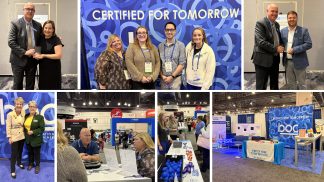
On August 28, 2025, the CSG hosted a Legislative Summit at the BOC headquarters in Omaha, Nebraska to present the final compact model legislation and to educate prospective state leaders and legislators about how the compact works in practice. The event marked a significant step forward in advancing the AT Compact from development to implementation.
The Summit drew approximately 50–55 attendees, with representation from 23 states and Washington, D.C. Participants included state association leaders, regulatory agency representatives, state board members, legislators and representatives from the U.S. Department of Defense, CSG, National Athletic Trainers’ Association (NATA) and the BOC.
The agenda was designed to provide a clear overview of the compact and answer the most pressing questions from those tasked with enacting it. Highlights included:
- A section-by-section summary of the final model legislation
- A panel discussion featuring a compact attorney, a state regulatory executive and NATA governmental affairs leadership
- Sessions on state implementation, functionality of compact privileges and the role of a compact commission
- Exploration of data-sharing requirements and processes
- Multiple opportunities for attendee Q&A
What We Learned
Discussions at the Summit reinforced several key takeaways about the compact’s future:
- Strong support from state association leaders: Many expressed enthusiasm for the compact as a value-added benefit that will expand practice opportunities and make licensure more efficient for ATs.
- Familiar challenges remain: Attendees raised feedback previously heard about compact requirements and state-level implementation, underscoring the importance of clear communication and planning.
- Ongoing education is essential: Stakeholders agreed that clinicians, state leaders and regulators need continued resources and training to fully understand how compact privileges work and how to navigate the legislative process.
Bridging Policy and Practice
The AT Compact is only as strong as the states that enact it. By bringing together lawmakers, regulators and professional leaders, the Legislative Summit created a collaborative space to ensure consistent understanding and build momentum toward adoption. The event served as a bridge between the finalized model legislation and real-world implementation, equipping stakeholders with the knowledge and resources they need to advocate for and apply the compact in their states.
Looking Ahead
With the model legislation complete and education efforts underway, the focus now shifts to state-level action. As more states introduce and pass compact legislation, ATs will be better positioned to provide care across borders, benefiting both the profession and the patients they serve. At least seven states must join the compact before it can be implemented.
To stay updated on the compact’s progress and resources available for state leaders, visit the AT Compact website or the BOC Newsroom.